



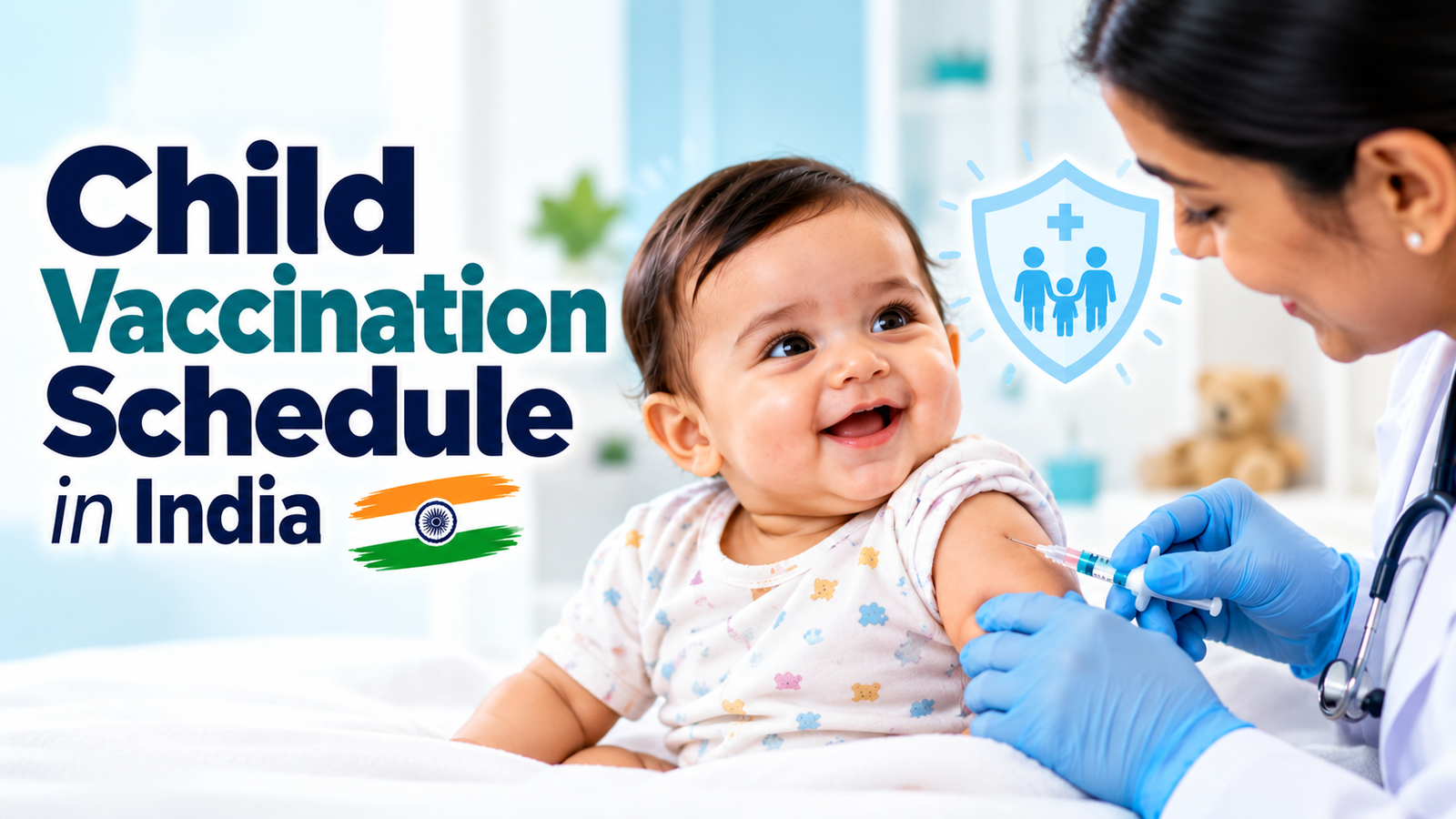
The child vaccination schedule in India helps parents understand which vaccines are recommended from birth through adolescence. For first-time parents, keeping track of vaccine names, doses and appointment dates can feel overwhelming. Knowing the main milestones makes it easier to plan your child’s preventive healthcare.
India has a government vaccination programme called the Universal Immunization Programme (UIP). The Indian Academy of Pediatrics (IAP) also publishes recommendations that include additional vaccines for parents to discuss with their pediatrician.
This guide explains the age-wise government schedule, additional vaccine recommendations, common side effects, missed doses and practical steps for preparing for a vaccination visit.
Important: This article is for general education. It is not an individualized vaccination prescription. Confirm your child’s current schedule with a qualified pediatrician or authorized vaccination centre.
1. Government Child Vaccination Schedule in India
India’s Universal Immunization Programme provides vaccines to eligible children through government health facilities and authorized immunization services. The programme protects against several serious infectious diseases, including tuberculosis, polio, hepatitis B, diphtheria, pertussis, tetanus, Hib disease, rotavirus, pneumococcal disease, measles and rubella.
Japanese encephalitis vaccination is provided in designated endemic areas. The exact schedule and vaccine availability should always be confirmed locally.
Age-wise government vaccination chart
| Child’s age | Vaccines in the government schedule |
|---|---|
| At birth | BCG, OPV-0 and hepatitis B birth dose. |
| 6 weeks | OPV-1, pentavalent-1, rotavirus-1, fIPV-1 and PCV-1. |
| 10 weeks | OPV-2, pentavalent-2 and rotavirus-2. |
| 14 weeks | OPV-3, pentavalent-3, fIPV-2, rotavirus-3 and PCV-2. |
| 9–12 months | MR-1 and PCV booster. JE-1 is given in designated endemic areas. |
| 16–24 months | MR-2, DPT booster-1 and OPV booster. JE-2 is given in designated endemic areas. |
| 5–6 years | DPT booster-2. |
| 10 years | Td vaccine. |
| 16 years | Td vaccine. |
This chart summarizes the government schedule described in official National Immunization Schedule resources. Vaccine guidance can change, so confirm the latest details with your vaccination centre before planning doses.
Government programme vaccines and vaccines recommended by a pediatrician are not always identical. The UIP covers essential vaccines through public services, while IAP guidance includes additional recommendations based on the child’s age, history and health needs.
2. Additional Vaccines to Discuss With Your Pediatrician
The IAP’s Advisory Committee on Vaccines and Immunization Practices publishes recommendations for children and adolescents. Depending on the child and the latest guidance, parents may wish to discuss the following vaccines with their pediatrician.
| Vaccine | What it helps protect against |
|---|---|
| Influenza | Seasonal influenza and its potential complications. |
| Hepatitis A | Hepatitis A infection, which affects the liver. |
| Varicella | Chickenpox. |
| Typhoid conjugate vaccine | Typhoid fever. |
| MMR | Measles, mumps and rubella. The government programme includes MR vaccination; discuss the applicable MMR recommendations with your pediatrician. |
| HPV | Human papillomavirus infections that can cause cervical cancer and other HPV-related diseases. |
| Meningococcal | Certain serious meningococcal infections. It may be recommended in selected risk or travel situations. |
Rotavirus and pneumococcal conjugate vaccines are also included in India’s government programme. Parents should ask the pediatrician whether additional doses or a different schedule apply to their child.
In 2026, the Government of India announced a nationwide HPV vaccination campaign for girls aged 14 years. Parents should check current eligibility and availability through official public health channels. This does not replace advice about an individual child’s vaccination history.
Not every vaccine listed above is routinely available free under UIP. Recommendations, costs and eligibility can vary. Do not use a general article to decide independently which vaccine your child should receive.
3. Why Are Childhood Vaccines Important?
Vaccines help the immune system recognize specific germs and respond more effectively if the child encounters them later. Following the recommended schedule is an important part of preventive healthcare.
- Help prevent serious disease: Vaccines reduce the risk of selected infections and their complications.
- Protect children early: Some infections are especially dangerous during infancy, which is why vaccination begins early in life.
- Reduce the spread of infection: High vaccination coverage helps limit transmission within communities.
- Support community protection: Vaccination reduces the risk of outbreaks and helps protect vulnerable people.
- Maintain protection: Booster doses are used when recommended to strengthen or renew immunity.
No vaccine prevents every infection, and protection varies between vaccines. Your healthcare professional can explain the expected benefits and limitations for your child.
4. What Do Common Childhood Vaccines Protect Against?
| Vaccine | Protection |
|---|---|
| BCG | Helps protect against severe forms of childhood tuberculosis. |
| Hepatitis B | Hepatitis B virus infection affecting the liver. |
| OPV / IPV | Poliomyelitis, commonly known as polio. |
| Pentavalent | Diphtheria, pertussis, tetanus, hepatitis B and Haemophilus influenzae type b (Hib) disease. |
| Rotavirus | Helps protect against severe rotavirus diarrhoea. |
| PCV | Helps protect against pneumococcal infections, including some cases of pneumonia and meningitis. |
| MR / MMR | MR protects against measles and rubella; MMR also protects against mumps. |
| DPT / Td | Protection against diphtheria, pertussis and/or tetanus, depending on the formulation. |
| HPV | Helps prevent HPV infections that can cause cervical cancer and other HPV-related diseases. |
Vaccine formulation and timing depend on the child’s age, previous doses and the applicable schedule. Keep the vaccination record updated after every visit.
5. Common Side Effects After Childhood Vaccination
Mild reactions may occur after some vaccines. These usually settle on their own, although the type and duration of reactions depend on the vaccine and the child.
- Pain, redness or swelling at the injection site.
- Mild fever.
- Temporary fussiness or irritability.
- Sleepiness or reduced appetite for a short period.
Keep your child comfortable, offer breast milk or age-appropriate fluids, and follow the healthcare professional’s instructions. Ask before giving medicines to prevent fever or pain. Do not give aspirin to a child unless specifically directed by a specialist.
When should parents seek medical help?
Seek urgent medical care if your child has difficulty breathing, swelling of the face or throat, collapse, or signs of a severe allergic reaction. Contact a healthcare professional if your child appears seriously unwell, develops a concerning fever, or has symptoms that worry you.
6. What If Your Child Misses a Vaccine?
Missing an appointment does not necessarily mean your child must restart the entire vaccination series. In many cases, a healthcare professional can prepare a catch-up schedule based on the doses already received.
- Find your child’s vaccination card or immunization record.
- Contact your pediatrician or an authorized vaccination centre.
- Share the names and dates of previous vaccines, if available.
- Ask which dose is due next and when the following appointment should take place.
The correct catch-up plan depends on the vaccine, child’s age, previous doses, minimum intervals and age restrictions. Avoid guessing or changing the schedule yourself.
7. How Can First-Time Parents Prepare for a Vaccination Visit?
- Carry your child’s vaccination card and relevant medical records.
- Tell the healthcare provider about previous reactions, allergies and current illness.
- Ask which vaccines are due and whether additional vaccines are recommended.
- Confirm the next vaccination date before leaving the clinic.
- Store the updated vaccination record safely and bring it to future appointments.
- Ask your local government health facility which vaccines are available free of charge and whether an appointment is needed.
A calendar reminder can help you keep track of upcoming appointments. If you are unsure whether a dose is due, ask your vaccination provider to review the record.
8. Frequently Asked Questions
Which vaccines should a newborn receive in India?
The core government schedule lists BCG, the oral polio birth dose (OPV-0) and the hepatitis B birth dose. Discuss the hepatitis B birth dose promptly with your maternity or newborn care team because its timing is important.
Are government vaccines enough for my child?
The government programme provides important protection against several serious diseases. IAP guidance includes additional recommendations. Ask your pediatrician which vaccines are appropriate for your child’s age and circumstances.
Can my baby receive multiple vaccines at one visit?
Multiple vaccines may be scheduled for the same visit when recommended. The clinician will check the child’s age, previous doses, vaccine compatibility and medical history.
Can a child be vaccinated during a mild cold?
A mild illness does not always require postponing vaccination. The decision depends on the child’s condition and the vaccine. Tell the healthcare professional about the symptoms before vaccination.
Does my child need booster doses?
Yes, when boosters are included in the recommended schedule. Some vaccines require additional doses to maintain protection as children grow. Follow the schedule from your pediatrician or vaccination centre.
Where can parents check the official vaccination schedule?
Parents can consult the Ministry of Health and Family Welfare, the National Health Mission and the Indian Academy of Pediatrics. Official resources are listed below.
9. Conclusion: Keep Your Child’s Vaccination Record Updated
Following the child vaccination schedule in India helps parents plan protection from birth through adolescence. Start with the government schedule, discuss additional IAP-recommended vaccines with your pediatrician and keep an accurate record of every dose.
If your child has missed a vaccination or you are uncertain about the next dose, seek professional advice rather than restarting or changing the schedule yourself.
Every child has an individual medical history. Use this guide as a starting point for a discussion with a qualified healthcare professional, not as a substitute for personalized medical advice.
Official References and Further Reading
These authoritative resources can help parents and healthcare professionals check vaccination guidance. Always verify the latest available schedule before making vaccination decisions.
Explore More on Heal Vista Blog
Visit Heal Vista Blog for more educational articles about children’s health, newborn care, child development, nutrition and preventive healthcare.
Medical disclaimer: This article is for general educational purposes only. Vaccine recommendations may change. Consult a qualified pediatrician or authorized vaccination centre for an individual child’s vaccination schedule.
