




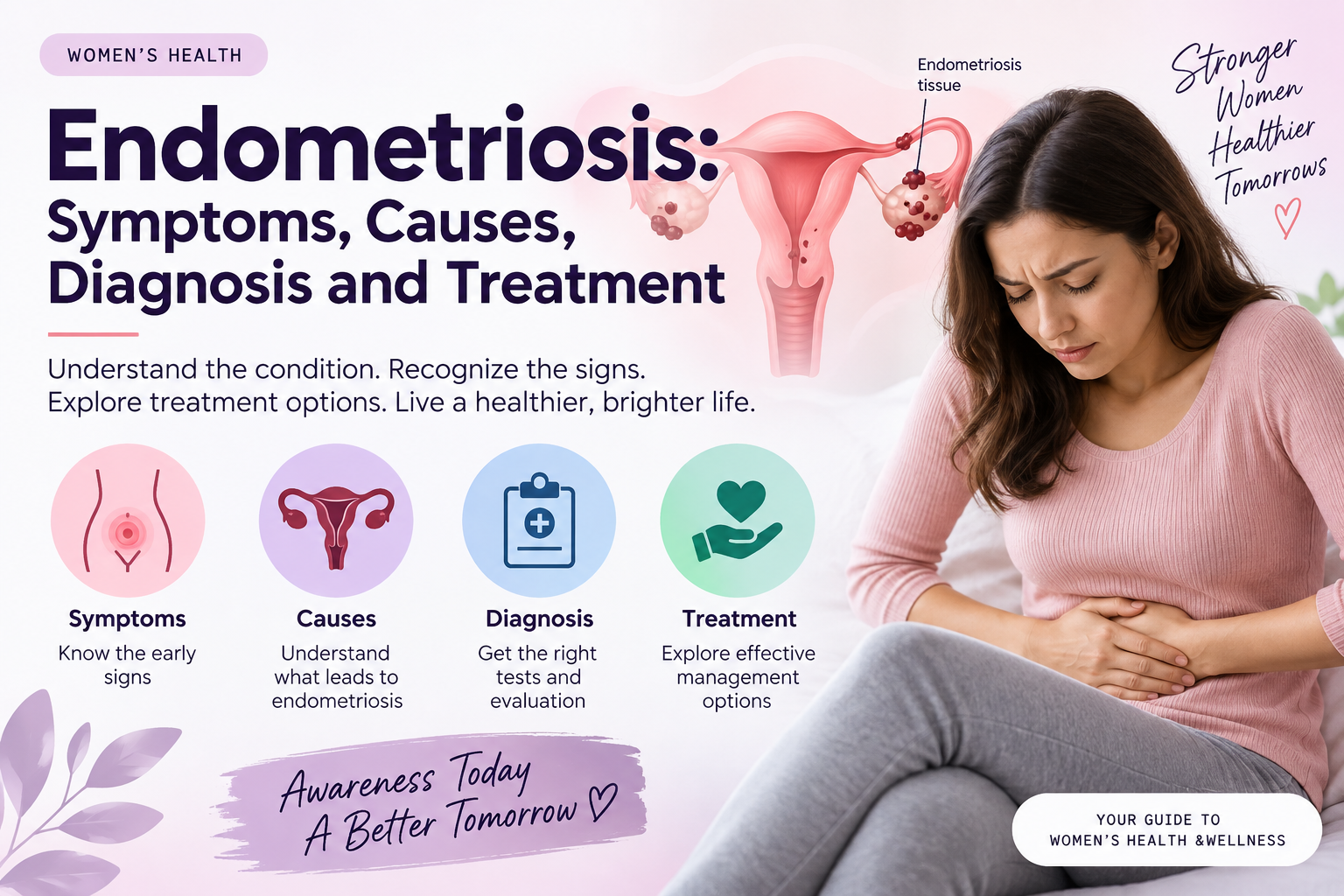
Endometriosis: Symptoms, Causes, Diagnosis and Treatment
Endometriosis is a chronic condition that can cause painful periods, pelvic pain, pain during sex and fertility difficulties. Learn about the symptoms, diagnosis and treatment options in this easy-to-understand patient guide.
What Is Endometriosis?
Endometriosis is a chronic condition in which tissue similar to the lining of the uterus grows outside the uterus. It most often affects structures in the pelvis, including the ovaries, fallopian tubes and tissues around the uterus, but it can sometimes occur in other parts of the body.
This tissue can respond to hormonal changes during the menstrual cycle. Inflammation and scar tissue can develop around affected areas, which may lead to pain and other symptoms.
Endometriosis affects an estimated 10% of women of reproductive age worldwide. However, symptoms vary considerably. Some people have severe pain, while others may have few or no noticeable symptoms.
Endometriosis is not simply “bad period pain.” If menstrual or pelvic pain regularly interferes with work, studies, relationships, sleep or normal activities, it deserves medical evaluation.
What Are the Symptoms of Endometriosis?
The symptoms of endometriosis can differ from one person to another. They may also change over time.
Severe Period Pain
Period pain is common, but pain that is severe enough to stop you from attending work, college or normal activities should not simply be dismissed as “normal.”
Pain During Sex
Deep pain during or after sexual intercourse can occur when endometriosis affects tissues around the uterus, ovaries or other pelvic structures.
This symptom can have a significant effect on relationships and quality of life.
Pain With Bowel Movements
Some people with endometriosis experience pain when passing stool, particularly during menstruation. Bowel symptoms may also include bloating, constipation or diarrhoea.
These symptoms can overlap with gastrointestinal conditions, so proper medical assessment is important.
Pain While Urinating
Pain or discomfort during urination, particularly when it follows a menstrual pattern, can sometimes occur when endometriosis involves structures near the urinary tract.
Difficulty Getting Pregnant
Endometriosis can be associated with infertility. In some people, it is discovered during an evaluation for difficulty becoming pregnant.
What Causes Endometriosis?
The exact cause of endometriosis is not fully understood.
Researchers are studying several possible mechanisms, including hormonal, inflammatory, immune and genetic factors. Having a close family history of endometriosis may also be associated with a higher risk.
Because its underlying cause is not completely understood, there is currently no proven way to prevent endometriosis.
Who Can Develop Endometriosis?
Endometriosis can occur during the reproductive years, from adolescence through menopause.
It can affect people with different symptom patterns and at different stages of life. Some individuals have symptoms for years before receiving a diagnosis.
The WHO reports that delays in diagnosis remain common, with estimates of approximately 4 to 12 years in some settings.
This is one reason it is important not to ignore persistent pelvic or menstrual pain.
How Is Endometriosis Diagnosed?
There is no single symptom or simple blood test that can diagnose every case of endometriosis.
A doctor will usually begin by understanding your symptoms, menstrual history and medical history.
Medical History
Your doctor may ask about:
- When your pain started
- How severe the pain is
- Whether pain follows your menstrual cycle
- Menstrual bleeding
- Pain during sex
- Bowel or urinary symptoms
- Previous treatments
- Fertility concerns
- Family history of endometriosis
Keeping a record of your menstrual cycle and symptoms can help you describe patterns during your appointment.
Physical or Pelvic Examination
Depending on your symptoms and circumstances, a clinician may perform an examination to look for findings that could support a diagnosis.
However, a normal examination does not necessarily rule out endometriosis.
Ultrasound
Ultrasound is commonly used when endometriosis is suspected.
It can help identify conditions such as ovarian endometriomas and may detect certain forms of deep endometriosis.
However, a normal ultrasound does not completely exclude endometriosis, particularly superficial disease.
MRI
An MRI may be recommended in selected patients, particularly when doctors need more detailed information about suspected deep endometriosis or involvement of particular pelvic structures.
Laparoscopy
Laparoscopy is a minimally invasive surgical procedure in which a camera is inserted through a small incision to examine the abdomen and pelvis.
Depending on the situation, endometriosis lesions can sometimes be treated during the same procedure.
Current guidance recognizes that surgery is not necessarily required before starting treatment in every person with suspected endometriosis.
Endometriosis Treatment Options
There is currently no definitive cure for endometriosis, but treatment can reduce symptoms, improve quality of life and address fertility concerns.
Treatment is individualized. Your doctor may consider your symptoms, severity and location of disease, age, previous treatments, side effects, reproductive plans and preferences regarding medication or surgery.
1. Pain-Relief Medicines
Pain medicines may be used to manage endometriosis-related pain.
Commonly used options include medicines such as paracetamol or non-steroidal anti-inflammatory drugs (NSAIDs), depending on the individual’s medical history.
Not every painkiller is appropriate for everyone. Ask your doctor or pharmacist about the safest option and dose for you.
2. Hormonal Treatment
Hormonal medicines may help reduce endometriosis-related pain by changing hormonal stimulation of endometriosis tissue.
Depending on the individual, options may include:
- Combined hormonal contraceptives
- Progestin medicines
- Hormonal intrauterine systems
- GnRH-based treatments
These treatments are not suitable for everyone and some are not appropriate when someone is actively trying to conceive.
3. Surgery for Endometriosis
Surgery may be considered when pain remains troublesome despite medical treatment.
It may also be considered when endometriosis is extensive, affects particular organs, or when an endometrioma or other complication requires treatment.
Laparoscopic surgery may be used to remove endometriosis lesions or treat adhesions in appropriate cases.
Important: Surgery Does Not Guarantee Permanent Relief
Surgery does not guarantee that symptoms will never return. Endometriosis can recur, and some people continue to experience pelvic pain even after treatment.
Is Hysterectomy a Cure for Endometriosis?
A hysterectomy may be considered in selected people who have severe symptoms and do not wish to become pregnant, but it is not automatically a cure for endometriosis.
The decision is complex and depends on the individual’s symptoms, disease location, reproductive plans and previous treatment.
Endometriosis and Fertility
Endometriosis can affect fertility, but having endometriosis does not automatically mean that pregnancy is impossible.
Some people conceive naturally, while others may need fertility treatment.
Can Lifestyle Changes Help With Endometriosis?
Lifestyle changes cannot cure endometriosis, but some people find that supportive measures help them manage symptoms and improve daily functioning.
- Regular physical activity
- Adequate sleep
- Stress-management strategies
- A balanced diet
- Pelvic-floor physiotherapy when appropriate
- Psychological support for chronic pain
- Keeping a symptom and menstrual diary
There is no single “endometriosis diet” proven to cure the condition. Be cautious about websites or products promising that a particular food, supplement or detox can eliminate endometriosis.
When Should You See a Doctor?
Consider speaking with a gynaecologist if you have:
- Period pain that prevents normal activities
- Persistent pelvic pain
- Pain during sex
- Pain during bowel movements or urination
- Very heavy periods
- Recurrent abdominal or pelvic symptoms
- Difficulty becoming pregnant
- Symptoms that continue despite treatment
Seek Urgent Medical Care
Severe or sudden abdominal or pelvic pain, fainting, very heavy bleeding, difficulty breathing, or other rapidly worsening symptoms may have causes other than endometriosis and should be assessed urgently.
Endometriosis vs Normal Period Pain
It can be difficult to know when period pain requires medical attention. The following comparison can help you recognize symptoms that deserve professional evaluation.
| More Typical Period Symptoms | Symptoms That Deserve Medical Evaluation |
|---|---|
| Mild cramps | Severe or disabling cramps |
| Pain improves with usual measures | Pain remains severe despite treatment |
| Daily activities continue normally | Missing work, school or normal activities |
| No significant symptoms between periods | Persistent pelvic pain |
| No pain during sex | Pain during or after sex |
| No bowel or urinary pain | Recurrent pain with bowel movements or urination |
| No fertility concerns | Difficulty becoming pregnant |
This comparison is not a diagnostic test. Other conditions can cause similar symptoms, including adenomyosis, fibroids, pelvic inflammatory disease and irritable bowel syndrome.
Frequently Asked Questions About Endometriosis
Is endometriosis curable?
There is currently no treatment that definitively cures endometriosis. However, medicines, surgery and supportive care can help manage symptoms and improve quality of life.
Is endometriosis cancer?
Endometriosis is a different condition from cancer. It is a chronic inflammatory condition involving endometrium-like tissue outside the uterus.
Can endometriosis cause infertility?
Endometriosis can be associated with difficulty becoming pregnant. However, many people with endometriosis do become pregnant, either naturally or with fertility assistance.
Can endometriosis come back after surgery?
Yes. Symptoms or endometriosis lesions can recur after treatment, and some people may need additional management over time.
Can endometriosis occur without severe pain?
Yes. Some people have few or no noticeable symptoms, while others experience significant pain. The severity of symptoms does not always directly correspond to the amount of disease.
Does a normal ultrasound rule out endometriosis?
No. Ultrasound can identify some forms of endometriosis, but a normal scan does not completely exclude the condition, particularly superficial disease.
Can endometriosis affect the bowel or bladder?
Yes. Endometriosis can involve or occur near the bowel and urinary system and may cause symptoms such as painful bowel movements or urination.
Living With Endometriosis
Endometriosis can affect much more than menstrual health. Persistent pain may interfere with work, exercise, sleep, relationships and emotional wellbeing.
The goal of treatment is not simply to reduce pain on one particular day. Long-term care should consider the person’s overall quality of life, reproductive plans and changing symptoms.
Track: When the pain occurs → Where it hurts → How severe it is → How long it lasts → Whether it affects bowel or urinary function → What treatment you have tried → Whether you are planning pregnancy.
This information can help your healthcare professional understand the pattern of your symptoms.
Key Takeaways
- Endometriosis occurs when tissue similar to the uterine lining grows outside the uterus.
- Severe period pain is one of the common symptoms, but symptoms vary widely.
- Pelvic pain, painful sex, bowel or urinary pain and fertility problems can also occur.
- Ultrasound and sometimes MRI can help with evaluation, but a normal scan does not always rule out endometriosis.
- Treatment may include pain medicines, hormonal treatment, surgery or fertility care.
- There is currently no definitive cure, but symptoms can often be managed.
- Treatment should be individualized, especially when pregnancy is desired.
- Persistent or disabling period pain should not simply be accepted as normal.
Medical Disclaimer
This article is intended for general health education and does not replace consultation with a qualified healthcare professional.
Endometriosis can present differently from person to person, and diagnosis requires an appropriate clinical assessment.
Do not start, stop or change prescription medicines based only on information in this article.
Written by: Heal Vista Blog Editorial Team
Medical Review: To be reviewed by a qualified Obstetrician & Gynaecologist
Last Updated: September 2026
Next Review: September 2027
